



Uterine fibroids are a common type of noncancerous tumor that can grow in and on your uterus. Not all fibroids cause symptoms, but when they do, they can include heavy menstrual bleeding, back pain, frequent urination and pain during sex. Small fibroids often don’t need treatment, but larger fibroids can be treated with medications or surgery.
Advertisement
Cleveland Clinic is a non-profit academic medical center. Advertising on our site helps support our mission. We do not endorse non-Cleveland Clinic products or services. Policy
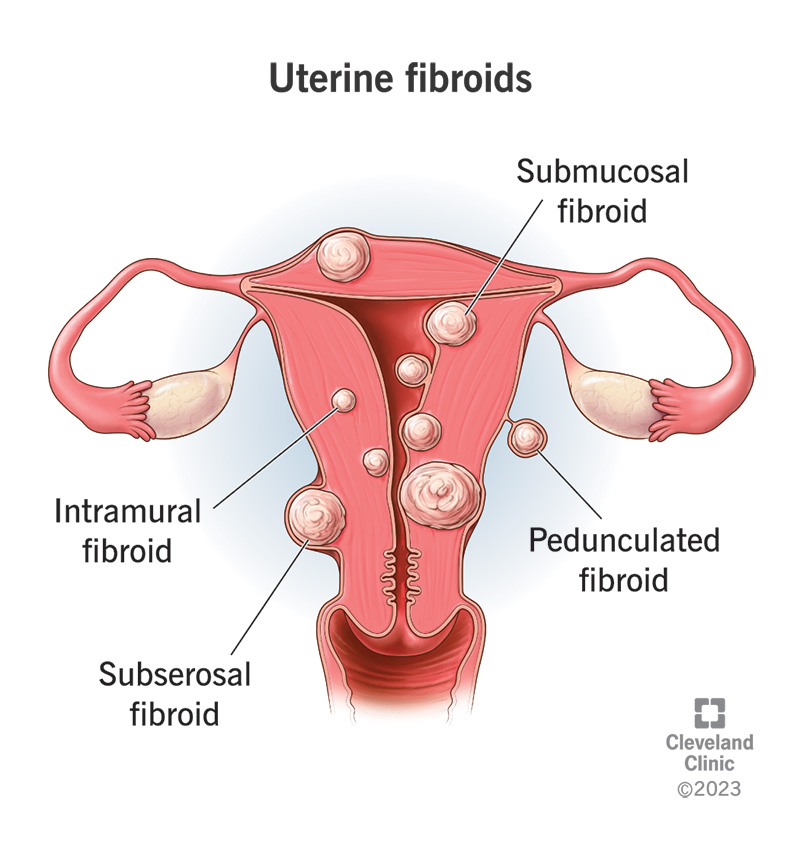
Image content: This image is available to view online.
View image online (https://my.clevelandclinic.org/-/scassets/images/org/health/articles/9130-uterine-fibroids)
Uterine fibroids (also called leiomyomas or uterine myomas) are growths made of muscle and tissue that form in or on the wall of your uterus. These growths are very common and aren’t usually cancerous.
Advertisement
Cleveland Clinic is a non-profit academic medical center. Advertising on our site helps support our mission. We do not endorse non-Cleveland Clinic products or services. Policy
A fibroid in your uterus can cause a variety of symptoms, like pain and heavy, irregular vaginal bleeding. Sometimes, you have no symptoms and don’t know you have fibroids. Treatment typically depends on your symptoms and how they impact your life.
There are different types of fibroids depending on where they’re located and how they attach to your uterus. Specific types include:
Video content: This video is available to watch online.
View video online (https://cdnapisec.kaltura.com/p/2207941/sp/220794100/playManifest/entryId/1_zew2os1y/flavorId/1_5f3sgelj/format/url/protocol/https/a.mp4)
What are uterine fibroids and what are the risk factors?
Most small fibroids don’t cause symptoms or require treatment. You may not even know you have them. Your healthcare provider may recommend regular checkups to monitor them. Larger fibroids can cause a variety of symptoms, including:
Advertisement
Fibroids are typically rounded growths that look like smooth bumps. In some cases, they can be attached with a thin stem, giving them a mushroom-like appearance. They can grow as a single nodule (one growth) or in a cluster. Clusters of fibroids can range in size from 1 millimeter to more than 20 centimeters (8 inches) in diameter or even larger. For comparison, fibroids can be as small as a seed or get as large as a watermelon.
The exact cause is unknown, but healthcare providers believe the hormones estrogen and progesterone play a role. Studies show that fibroids tend to grow when hormone levels are higher (like during pregnancy) and shrink when hormone levels are low (like during the transition to menopause).
Several risk factors can play a role in your chances of developing fibroids. These can include:
Fibroids happen most often in people between 30 and 50 years old. They’re rare before your first period. It’s uncommon for fibroids to grow after menopause.
Most uterine fibroids don’t cause serious complications. The most common complications of fibroids are:
Healthcare providers often find uterine fibroids during a pelvic exam. Heavy bleeding and other symptoms may also point to the condition.
Several tests can confirm fibroids and show their size and location. These may include:
Treatment for uterine myomas can vary depending on the size, number and location of the fibroids, as well as what symptoms they’re causing. Possible treatments can include medications and/or surgery.
You should also consider your plans for pregnancy in the future. Talk to your healthcare provider about your fertility goals when discussing treatment options. Only you and your provider can decide the best course of treatment or if treatment is necessary.
Advertisement
If you don’t have any symptoms, or you have small fibroids, you may not need treatment. In these cases, your provider may recommend monitoring the fibroids with pelvic exams or ultrasounds. If you have large fibroids or your symptoms are causing you pain or excessive bleeding, getting treatment may be the best option.
Medications can help manage symptoms like heavy bleeding and anemia.
Advertisement
The type of surgery for fibroid removal depends on several factors, including the size, location and number of fibroids, and your plans for future pregnancy. Some options preserve your uterus so you can get pregnant in the future.
Myomectomy is surgery to remove uterine fibroids while keeping your uterus in place. The best option for you depends on the size, number and location of the fibroids. Types of myomectomy include:
If you aren’t planning to become pregnant in the future, your healthcare provider may recommend other options. These treatments can be very effective, but they usually prevent pregnancy. These can include:
Advertisement
There isn’t one size that automatically means it needs to be removed. For example, fibroids the size of a small marble may still cause excessive bleeding depending on their location. Your healthcare provider can discuss symptoms that might require surgical treatment.
Contact your healthcare provider if you have symptoms of uterine fibroids, like:
Fibroids are very common, and many people live with them without any serious problems. They aren’t usually dangerous. Your healthcare provider will monitor the fibroids over time, and focus on managing any symptoms if they develop. Treatments for fibroids are very effective. Your healthcare provider can discuss the best treatment option for you based on your situation.
Fibroids can shrink after menopause. This happens because hormone levels decrease. When the fibroids shrink, your symptoms may go away. Small fibroids may not need treatment if they aren’t causing any symptoms.
Yes, you can get pregnant. If you already have fibroids when you become pregnant, your healthcare provider will monitor them during your pregnancy. During pregnancy, hormone levels increase. These hormones support the pregnancy, but they can also make fibroids grow. Large fibroids can lead to complications during pregnancy.
Uterine fibroids are a common condition. Some fibroids are small and don’t cause any symptoms at all. Other times, fibroids can cause symptoms like pain and heavy vaginal bleeding. Talk to a healthcare provider if you have abdominal pain or unusual vaginal bleeding. Treatments are available to help manage symptoms.



Sign up for our Health Essentials emails for expert guidance on nutrition, fitness, sleep, skin care and more.
Learn more about the Health Library and our editorial process.
Cleveland Clinic’s health articles are based on evidence-backed information and review by medical professionals to ensure accuracy, reliability and up-to-date clinical standards.
Cleveland Clinic’s health articles are based on evidence-backed information and review by medical professionals to ensure accuracy, reliability and up-to-date clinical standards.
Uterine fibroids can disrupt your life. At Cleveland Clinic, our experts help create a treatment plan that works for you and fits into your busy life.
